⚠️ WARNING: 7-OH & KRATOM
Concentrated 7-OH products carry serious dependence and addiction risks.
Federal action to temporarily schedule concentrated 7-OH is moving forward.
7-OH & Kratom Risk & Treatment

Understanding 7-OH (7-Hydroxymitragynine) and Kratom-Based Products
7-OH products are increasingly sold in concentrated forms that can have powerful opioid-like effects. They may be found in smoke shops, gas stations, convenience stores, and online, sometimes presented alongside kratom or other products that may appear relatively harmless.
Concentrated 7-OH can lead to tolerance, dependence, withdrawal, and addiction.
Ask Your Provider for More Information (503) 832-0945
Important Update: Federal Action on 7-OH
The federal government has begun the process of temporarily placing certain concentrated 7-OH substances into Schedule I of the Controlled Substances Act.
On July 1, 2026, the U.S. Drug Enforcement Administration announced its intent to temporarily schedule 7-hydroxymitragynine (7-OH) above a specified threshold, along with three related substances.
If the temporary scheduling orders take effect, covered products would become subject to the federal controls and penalties that apply to Schedule I controlled substances.
This action is aimed at concentrated and synthetic 7-OH products. According to the DEA and FDA, it is not intended to apply to natural botanical kratom containing only naturally occurring trace levels of 7-OH below the specified threshold.
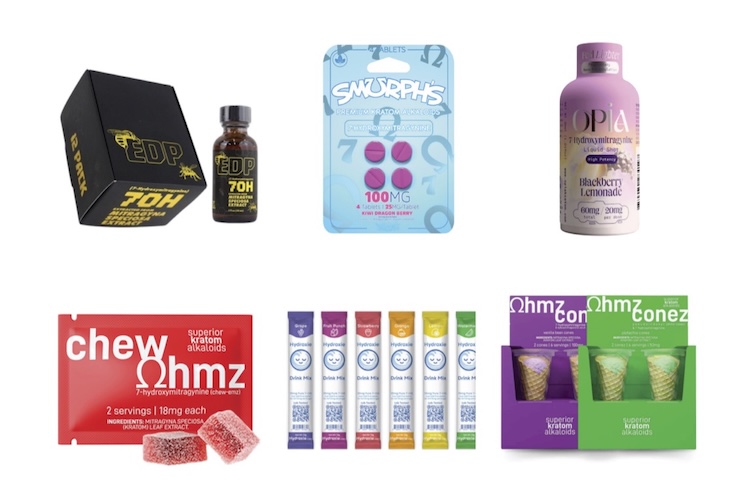
Have You Seen These in Stores?
Gas stations, smoke shops, convenience stores, and online.
Concentrated 7-OH may be sold as tablets, capsules, gummies, powders, drink mixes, shots, or other products.
Easy access does not mean a product is safe or non-addictive.
What Is 7-OH?
7-OH (7-hydroxymitragynine) is a psychoactive compound that occurs naturally in very small amounts in the kratom plant. Concentrated and semi-synthetic commercial products can contain substantially higher amounts.
7-OH interacts with opioid receptors and can produce opioid-like effects.
Potential risks include:
- Euphoric effects
- Sedation
- Increasing tolerance
- Physical dependence
- Withdrawal symptoms
- Cravings or compulsive use
Kratom vs. Concentrated 7-OH: What's the Difference?
Traditional botanical kratom and concentrated 7-OH products should not be treated as interchangeable.
- Botanical kratom: Naturally contains mitragynine and trace amounts of 7-OH.
- Concentrated 7-OH products: May contain much higher concentrations of 7-OH and produce more pronounced opioid-like effects.
- Enhanced or processed products: Concentrations and formulations can vary considerably between products.
Where Is Concentrated 7-OH Found?
Commercial products may include:
- Tablets and pressed pills
- Capsules
- Gummies and edibles
- Liquid shots or drink mixes
- Powders and extracts
- Dissolvable strips
- Products marketed as enhanced or concentrated kratom
How Do I Know If I've Become Dependent?
Dependence can develop when the body adapts to repeated use. Some warning signs may include:
- Needing larger or more frequent amounts to get the same effect
- Feeling sick or uncomfortable when you reduce or stop use
- Strong cravings
- Repeated unsuccessful attempts to cut back
- Planning your day around obtaining or using the product
- Continuing to use despite problems at work, home, school, or in relationships
What Will You Do If 7-OH Is No Longer Readily Available?
For someone who has developed physical dependence, a change in availability can create a very practical problem: dependence does not disappear when access to the product does.
If you are using concentrated 7-OH every day, experiencing withdrawal between doses, or finding that you cannot comfortably reduce your use, waiting until products become difficult or impossible to obtain may leave you trying to manage withdrawal without a plan.
You do not have to wait for regulations or store shelves to change before talking with a medical provider.
A provider can evaluate your current use, symptoms, mental health, other medications or substances, and treatment goals and help determine an appropriate next step.
Talk With a ProviderDon't Try to Predict Withdrawal on Your Own
People can have very different experiences when reducing or stopping substances with opioid-like effects. The appropriate approach depends on factors such as how much you use, how frequently you use it, how long you have been using it, other substances or medications you take, and your overall physical and mental health.
If you are concerned about dependence or withdrawal, talk with a qualified healthcare provider rather than waiting until you run out of a product or attempting to manage significant symptoms without medical guidance.
How the Center of Excellence Can Help
The Center of Excellence provides individualized outpatient treatment for substance use and co-occurring mental health concerns.
- Substance use evaluation
- Medication management
- Withdrawal support
- Mental health treatment
- Personalized treatment planning
- Ongoing follow-up and monitoring
Treatment is not one-size-fits-all. Our providers work with patients to understand what they are using, how it is affecting them, and what treatment options may be appropriate for their individual situation.
Important: Share This Information
Many people still do not recognize concentrated 7-OH products as substances capable of producing opioid-like effects and dependence. If someone you know regularly uses these products, encourage them to learn about the risks and the changing federal regulatory environment.
Using 7-OH Regularly?
Don't wait until access changes to start thinking about what comes next.
Talk with a provider about dependence, withdrawal, and treatment options.
Ask Your Provider for More Information Call (503) 832-0945